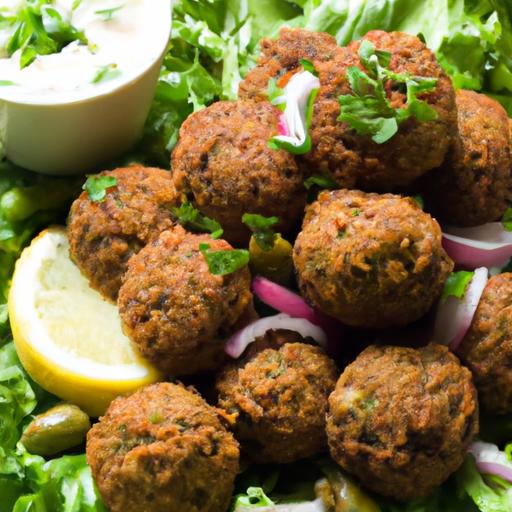

In the vast tapestry of global cuisine, falafel stands out as a beloved classic-crisp, golden, and brimming with fragrant herbs and spices. Yet, beyond its well-known Middle Eastern roots lies a captivating variation that invites food lovers to embark on a new culinary adventure: Sudanese falafel. Infused with bold flavors and local ingredients, this flavorful twist transforms the familiar treat into something vibrant and uniquely Sudanese.Join us as we explore how this humble fritter has evolved, uncovering the rich history and distinctive tastes that make Sudanese falafel a delicious story worth savoring.
Sudanese falafel offers a vibrant and unforgettable twist on the beloved classic treat, rooted deeply in Sudan’s rich culinary heritage. Unlike its more widely known Egyptian counterpart,this variation showcases uniquely fragrant ingredients like fenugreek leaves and fresh dill,elevating the texture and aroma in ways that beckon food lovers worldwide to explore its exquisite flavors. My first encounter with Sudanese falafel was during a festive gathering in Khartoum, where the blend of spices and crispness instantly captivated my palate, inspiring me to perfect this recipe at home.
Prep and Cook Time
- Preparation Time: 20 minutes
- Soaking Time: 8 hours (or overnight)
- cooking Time: 10-12 minutes
- Total Time: Approximately 9 hours (mostly passive)
Yield
- Serves 4-6 people (about 24 falafel balls)
Difficulty Level
- Medium – requires soaking and shaping falafel mixture with attention
Ingredients
- 2 cups dried fava beans, soaked overnight, drained
- 1 small onion, roughly chopped
- 3 cloves garlic, peeled
- ½ cup fresh parsley leaves
- ¼ cup fresh dill, finely chopped
- 3 tbsp dried fenugreek leaves (helba)
- 1 tsp ground cumin
- 1 tsp ground coriander
- 1 tsp baking powder
- 1 tbsp all-purpose flour (to bind)
- Salt and black pepper to taste
- Vegetable oil for deep frying
Instructions
- Prepare the beans: After soaking the fava beans overnight, drain and rinse thoroughly. The beans should be firm but slightly plump.
- Process the base: In a food processor, combine the soaked beans, onion, garlic, parsley, dill, and fenugreek leaves. Pulse repeatedly until you achieve a coarse,grainy mixture. Avoid over-processing into a paste as it affects texture.
- Season and bind: Transfer the mixture to a bowl. Add cumin, coriander, salt, pepper, baking powder, and flour. Mix well until combined but still coarse. The mixture should hold together when pressed; if too wet, add a bit more flour.
- Chill the mixture: Refrigerate for at least 30 minutes to firm up the texture,making shaping easier.
- Shape the falafel: With wet hands, form the mixture into small balls or flattened discs, about the size of a walnut.
- Heat oil: In a deep pan, heat vegetable oil to 350°F (175°C). Use a thermometer for best results.
- Fry falafel: Fry the falafel in batches, avoiding overcrowding. Cook until golden brown and crispy, about 4-6 minutes, turning gently halfway. Remove with a slotted spoon and drain on paper towels.
- Serve hot: Enjoy falafel promptly for maximum crispness. Keep warm in a low oven if serving later.
Chef’s Notes & Tips for Success
- Fenugreek leaves add a subtle,honeyed bitterness unique to Sudanese falafel,but if unavailable,substitute with a teaspoon of ground fenugreek powder.
- Soaking beans: Avoid using canned or cooked beans as they lack the firmness required for proper texture and crispness.
- Binders: Flour and baking powder ensure a lighter,crispier falafel. Adjust flour quantity slightly based on bean moisture.
- Oil temperature: Maintain steady heat; too low causes greasy falafel, too high burns the exterior.
- Falafel dough can be shaped and frozen before frying. Fry directly from frozen, increasing cook time slightly.
Serving Suggestions to Elevate Your sudanese Falafel Experience
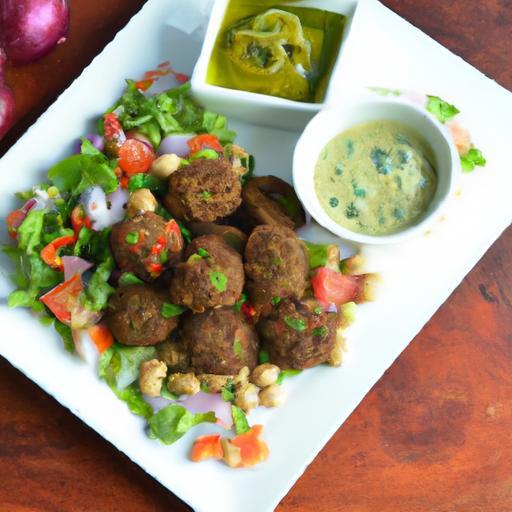
sudanese falafel is a versatile dish best complemented by refreshing and vibrant accompaniments. Serve on warm pita bread or kisra,a traditional Sudanese flatbread made from sorghum flour,for authentic flair. Drizzle with a creamy tahini sauce infused with garlic and lemon or a cooling yogurt-cucumber dip. Garnish with freshly chopped herbs, pickled carrots, and a scattering of sumac for a pop of tang. For a festive touch, add sliced radishes and a sprinkle of toasted sesame seeds. pair with a crisp salad of diced tomatoes, cucumber, and mint for balance.

| Nutrient | Per Serving (4 falafel balls) |
|---|---|
| Calories | 280 kcal |
| Protein | 12 g |
| Carbohydrates | 30 g |
| Fat | 10 g |
For more insights into Middle Eastern legumes and their nutritional value, visit Encyclopaedia Britannica’s detailed falafel article. To explore related recipes like traditional Egyptian falafel, check out our Egyptian Falafel Recipe for comparison and added inspiration.
Q&A
Q&A: Sudanese Falafel – A Flavorful Twist on a Classic Treat
Q1: What makes Sudanese falafel different from the traditional falafel we certainly know?
A1: Sudanese falafel, frequently enough called Ta’amiya, takes the classic Middle Eastern chickpea patty and gives it a vibrant new identity by using fava beans as its primary ingredient. This subtle swap creates a creamier texture and a slightly earthier flavor, distinguishing it from the chickpea-based falafels typical in other regions.Additionally,Sudanese falafel incorporates a medley of fresh herbs and spices that add layers of aromatic complexity,making each bite a flavorful adventure.
Q2: What unique ingredients are used in Sudanese falafel?
A2: Beyond the star ingredient-fava beans-Sudanese falafel blends in fresh coriander, parsley, dill, and green onions. Spices such as cumin,cardamom,and sometimes a hint of cayenne pepper enliven the mixture. Some recipes even include garlic and ginger for an extra punch. This symphony of ingredients gives Sudanese falafel its signature warm and herbaceous profile.
Q3: How is Sudanese falafel traditionally served?
A3: In sudan, falafel is often enjoyed as a street food delight, tucked into a warm flatbread like kisra or pita, accompanied by fresh tomatoes, cucumbers, and a drizzle of tahini or hot sauce. It’s not uncommon to find it paired with pickled vegetables, creating a balance of tangy and savory flavors.This makes it a perfect on-the-go snack or a satisfying meal that captures the essence of Sudanese hospitality and culinary creativity.
Q4: Is Sudanese falafel suitable for those following vegetarian or vegan diets?
A4: Absolutely! Sudanese falafel is naturally vegetarian and vegan-friendly, made entirely from plant-based ingredients. This makes it an excellent choice for those embracing meat-free diets while still craving something hearty, flavorful, and satisfying.
Q5: Can I try making Sudanese falafel at home?
A5: Definitely! While some ingredients might need a bit of hunting at specialty or Middle Eastern markets,the process is quite straightforward. Soaking dried fava beans overnight, blending them with fresh herbs and spices, shaping the mixture into patties, and deep-frying or pan-frying them to golden perfection will bring a taste of Sudan into your kitchen. served hot with accompaniments of your choice, homemade Sudanese falafel is sure to impress your family and friends.
Q6: What cultural meaning does Sudanese falafel hold?
A6: Beyond being a beloved comfort food, Sudanese falafel represents the country’s rich fusion of African and Arab culinary traditions. It’s a symbol of communal dining and street culture, bringing people together over bites that are both humble and deeply flavorful. Eating Sudanese falafel is not just enjoying a snack-it’s savoring a slice of Sudan’s vibrant heritage.
Q7: Where can I experience authentic Sudanese falafel outside Sudan?
A7: Authentic Sudanese falafel is increasingly finding its way into international culinary scenes thanks to Sudanese diaspora communities and adventurous chefs. Middle Eastern and African restaurants in cosmopolitan cities often feature Ta’amiya on their menus. For the truest experience,seek out eateries that highlight Sudanese or broader East African cuisines,or explore food festivals celebrating Sudanese culture.
Discovering Sudanese falafel opens up a world where tradition meets innovation on your plate-offering a delightful twist on a timeless favorite. Whether you enjoy it on the bustling streets of Khartoum or in your own kitchen,this flavorful treat invites you to taste the warmth and richness of Sudanese flavors.
In Conclusion
In every crispy bite of Sudanese falafel, tradition and innovation come together to tell a delicious story-one that honors the timeless charm of this classic treat while celebrating the rich spices and unique flair of Sudanese cuisine. Whether enjoyed as a street snack or a centerpiece at the table, Sudanese falafel invites food lovers to experience a vibrant twist on a beloved favorite. So next time you crave something familiar yet refreshingly new, let this flavorful journey carry you straight to the heart of Sudan, where every falafel is a flavorful festivity waiting to be savored.